

Today, more people than ever are focusing on their health: nutrition, movement, prevention, longevity. This is especially common among individuals over 50, but increasingly also among younger, performance-driven people who live under constant professional or mental pressure.
What is often overlooked is not an acute illness, but a subtle, underlying process: low-grade, chronic inflammatory activity (silent inflammation). It causes no pronounced symptoms, yet it can act over many years.
Silent inflammation does not hurt. It causes no classic inflammatory pain and rarely leads someone to seek medical attention immediately. That is precisely why it often persists for a long time.
This low-grade inflammatory activity influences, among other things:
Many people initially only notice:
And think: “It’s just age.”
A key reason silent inflammation is frequently overlooked lies in standard laboratory diagnostics. Many routine blood tests detect acute inflammation very well, but not low-grade, chronic inflammatory processes. More sensitive inflammatory markers are required to make these subtle processes visible.
Two markers play a particularly important role:
This explains why many people feel subjectively impaired while being told: “Your blood values are fine.” Often, the testing simply did not go deep enough.
Today, it is widely recognised that vascular disease is not primarily a cholesterol problem, but is closely linked to low-grade, chronic inflammatory processes within the vessel wall.
A key piece of evidence was provided by the CANTOS study. This large clinical trial demonstrated for the first time that targeted reduction of inflammatory activity – without changing cholesterol levels – significantly lowered the risk of cardiovascular events. Conducted by Novartis, the study confirmed that not elevated cholesterol alone, but inflammatory processes within the inner vessel wall are a major driver of atherosclerosis.
Atherosclerosis is not harmless. It is the direct cause of:
It usually develops not abruptly, but as a silent process over many years. Waiting until symptoms appear often means reacting too late.
Before measurable vascular problems arise, silent inflammation often becomes noticeable much earlier:
Not ill — but no longer performing as before.

An anti-inflammatory foundation is not created by supplements alone. Nutrition plays a central role. Highly processed foods, high sugar intake, trans fats, and unfavourable fatty acid profiles can promote low-grade inflammatory processes. Conversely, a natural, minimally processed diet can make a substantial contribution to stabilisation.
Supplements do not replace nutrition. They complement, support, and help stabilise — especially when the foundation is already in place.
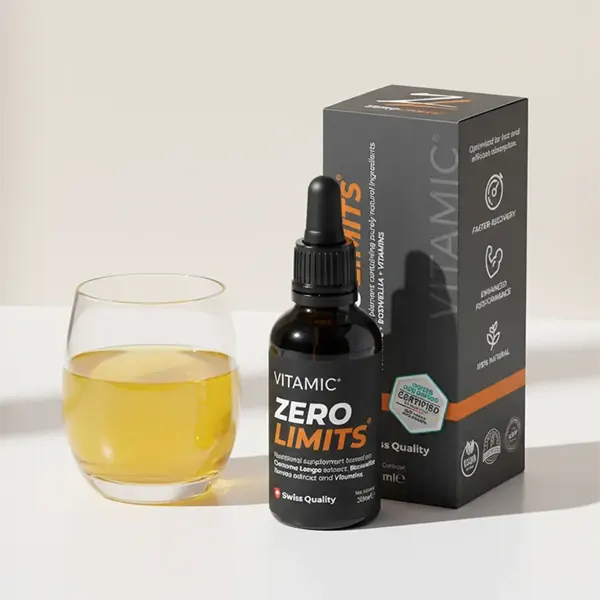
VITAMIC BIOSEN® and VITAMIC ZEROLIMITS® are not short-term solutions and do not make medical claims.
Their approach is fundamental:
They are intended for people:
Silent inflammation is quiet, but its consequences are real. Taking it seriously early is not an act of fear, but of responsibility — for your health today and for the years ahead.
In this first blog post, we explored silent inflammation as a low-grade, chronic process, its central role in atherosclerosis, and why it represents an invisible cause of many heart attacks and strokes.
In the next article, we will explain where silent inflammation truly begins and why it often develops unnoticed in everyday life. We will show:
Because understanding where silent inflammation originates also reveals where prevention can begin.

Dr. Martin Edlinger
Medical Affairs @ VITAMIC